Financial security is one of the most important goals for individuals and families. While many people focus on health insurance, life insurance, and retirement planning, disability insurance is often overlooked. However, the reality is that an unexpected illness or injury can prevent someone from working for months or even years, resulting in a significant loss of income.
Disability insurance coverage is designed to protect your earnings when you are unable to work due to a qualifying medical condition. Whether you are an employee, self-employed professional, freelancer, or business owner, understanding income protection insurance can help you build a stronger financial safety net.
In this guide, we explain how disability insurance works, what it covers, who needs it, and why it remains one of the most important forms of financial protection in 2026.
What Is Disability Insurance?
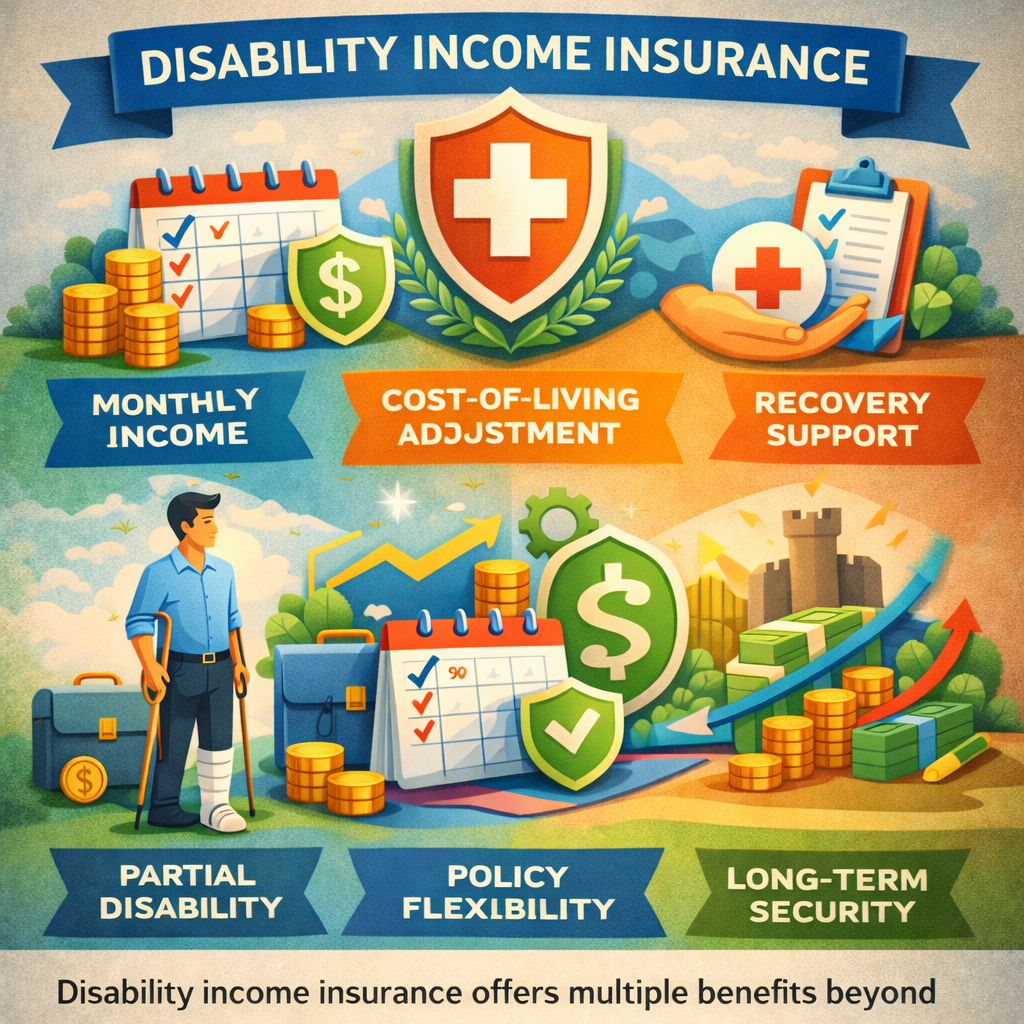
Disability insurance is a type of coverage that replaces a portion of your income if you become unable to work because of illness, injury, or certain medical conditions.
Unlike health insurance, which pays for medical expenses, disability insurance helps cover your everyday living costs such as:
- Mortgage or rent payments
- Utility bills
- Groceries
- Transportation expenses
- Loan payments
- Family living expenses
The primary purpose of disability insurance is to protect your ability to earn income, which is often your most valuable financial asset.
Why Income Protection Matters
Many people assume that serious disabilities only happen in dangerous occupations. In reality, disabilities can result from a wide range of conditions, including:
- Back injuries
- Cancer treatment
- Heart disease
- Stroke recovery
- Mental health conditions
- Severe accidents
- Chronic illnesses
Even office workers face risks that could prevent them from performing their jobs.
Without income protection, a sudden loss of earnings can quickly create financial hardship. Savings accounts may cover expenses temporarily, but long-term disabilities can exhaust financial reserves much faster than expected.
How Disability Insurance Works
When a covered disability prevents you from working, the insurance company may provide monthly benefit payments after the policy’s waiting period has been satisfied.
Most policies include several key components:
Benefit Amount
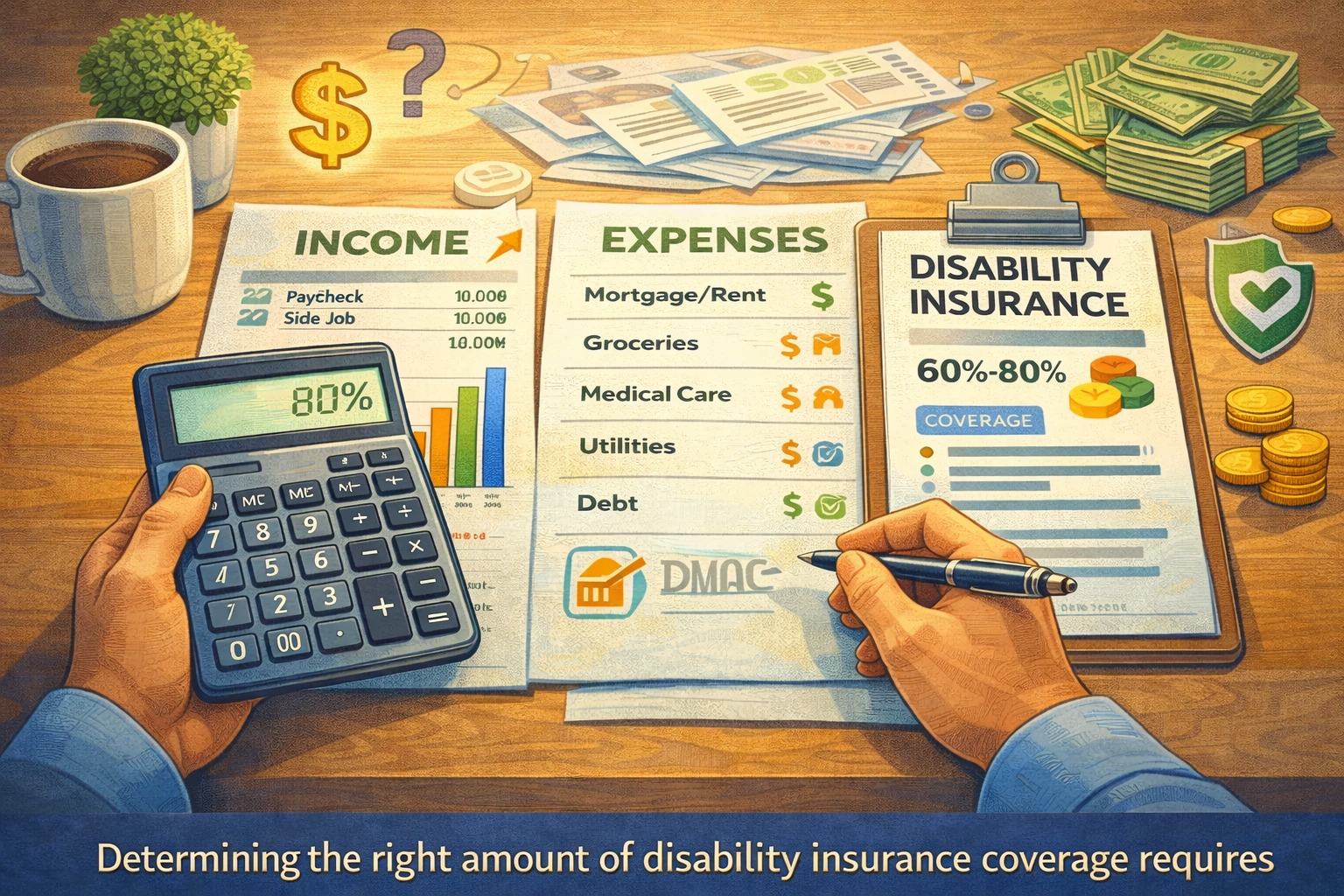
The policy generally replaces a percentage of your income, often between 50% and 70%.
Elimination Period
Also called the waiting period, this is the amount of time you must be disabled before benefits begin.
Common waiting periods include:
- 30 days
- 60 days
- 90 days
- 180 days
Longer waiting periods typically reduce premium costs.
Benefit Period
This determines how long benefits can continue.
Common options include:
- 2 years
- 5 years
- 10 years
- Until retirement age
Longer benefit periods provide greater financial protection but may increase premiums.
Short-Term Disability Insurance
Short-term disability insurance provides temporary income replacement for disabilities lasting a relatively short period.
Coverage may help replace income during recovery from:
- Surgery
- Pregnancy complications
- Temporary injuries
- Short-term illnesses
Benefits usually begin sooner than long-term policies and may last several months.
Short-term coverage can help bridge the gap until a person returns to work.
Long-Term Disability Insurance
Long-term disability insurance provides protection for extended disabilities that prevent a person from working for years.
These policies are often considered the foundation of comprehensive income protection planning.
Long-term coverage may be especially valuable for:
- Physicians
- Attorneys
- Engineers
- Executives
- Business owners
- Self-employed professionals
A long-term disability can have a lasting impact on earning potential, making this type of coverage an essential financial planning tool.
What Does Disability Insurance Cover?
Coverage varies by policy, but many plans may provide benefits when a medical condition prevents you from performing occupational duties.
Common covered conditions may include:
- Musculoskeletal injuries
- Neurological disorders
- Cancer
- Cardiovascular diseases
- Severe mental health conditions
- Accidental injuries
- Chronic illnesses
The specific policy language determines eligibility for benefits.
Understanding “Own Occupation” vs. “Any Occupation”
One of the most important concepts in disability insurance is how disability is defined.
Own Occupation Coverage
This definition generally focuses on whether you can perform the duties of your specific profession.
For example, a surgeon who loses hand mobility may qualify for benefits even if capable of working in another field.
Any Occupation Coverage
This definition may require that you be unable to perform any reasonable occupation for which you are qualified.
Because definitions can significantly affect benefit eligibility, reviewing policy details carefully is essential.
Who Should Consider Disability Insurance?
Many individuals can benefit from disability coverage, including:
Employees
Employer-sponsored benefits may provide limited protection, making supplemental coverage worth considering.
Self-Employed Professionals
Business owners often rely entirely on their ability to generate income.
A disability could significantly affect both personal finances and business operations.
High-Income Earners
Individuals with substantial financial obligations may require stronger income protection strategies.
Families with Dependents
Households relying on one or two primary income earners may face greater financial risk if disability occurs.
Factors That Affect Premium Costs
Several variables influence disability insurance pricing.
Age
Younger applicants often qualify for lower premiums.
Occupation
Jobs with higher injury risks may have higher costs.
Health Status
Medical history and current health conditions may impact eligibility and rates.
Coverage Amount
Higher monthly benefits generally increase premiums.
Waiting Period
Longer elimination periods often reduce monthly costs.
Disability Insurance Trends in 2026
The disability insurance market continues to evolve.
Several trends are becoming increasingly important:
Increased Awareness of Income Protection
More consumers recognize that income is their most valuable financial asset.
Digital Application Processes
Online quoting, underwriting, and policy management have become more common.
Flexible Coverage Options
Many insurers now offer customizable benefit structures to meet different financial needs.
Growing Interest Among Freelancers
The rise of remote work and self-employment has increased demand for private disability insurance coverage.
How to Choose the Right Disability Insurance Policy
When comparing policies, consider:
- Monthly benefit amount
- Waiting period
- Benefit duration
- Definition of disability
- Optional riders
- Financial strength of the insurer
Reviewing multiple options can help identify a policy that aligns with your financial goals and income protection needs.
Final Thoughts
Disability insurance plays a critical role in protecting financial stability when illness or injury interrupts your ability to earn a living. While health insurance covers medical treatment, disability coverage helps replace lost income and supports ongoing household expenses.
As economic uncertainty and healthcare costs continue to rise, income protection remains one of the most valuable components of a comprehensive financial plan. Understanding how disability insurance works and selecting appropriate coverage can provide peace of mind and greater financial resilience for the future.
How Underwriters Actually Evaluate a Condition
Disability underwriting is not a yes/no on your diagnosis. It is a judgment on four things: the likelihood the condition causes work loss, how long that loss typically lasts, whether treatment controls it, and whether you have already lost time to it.
Outcomes vary by carrier – which is why one decline is not the end of the process.
| Condition | Typical underwriting outcome | What decides it |
|---|---|---|
| Well-controlled hypertension | Standard offer | Medication compliance, readings under control |
| Type 2 diabetes, no complications | Standard to mild rating (+10-25%) | A1C, duration, complications, age |
| Type 1 diabetes | Rated or modified offer (+25-75%) | Control, complications, occupation class |
| Chronic low back pain, no surgery | Exclusion rider or rating | Imaging findings, work restrictions, treatment response |
| Post-surgical back, recovered | Standard after 12-24 months | Return to full duty, no residual limitations |
| Depression / anxiety, stable 2 years | Standard to +25% | Hospitalization history, medication stability, work history |
| Cancer history, 5+ years remission | Case-by-case, often standard | Type, stage, treatment completion, recurrence risk |
| Heart attack, 2+ years ago | Rated (+25-100%) or declined | Ejection fraction, interventions, age, occupation |
Rating Classes and What They Cost
| Offer | Meaning | Premium impact |
|---|---|---|
| Preferred best | Best health and occupation profile | Base rate |
| Standard | Normal health for age | Base to +15% |
| Table rating (A-J) | Elevated risk by increasing degree | +25% to +150% |
| Flat extra | A temporary or permanent surcharge | $2.50-$10 per $1,000 of benefit per year |
| Exclusion rider | Condition excluded, rest of coverage issued | No premium change, coverage gap |
| Modified / graded benefit | Reduced benefits in the first 1-2 years | Lower premium, weaker early coverage |
| Declined | No offer from this carrier | Another carrier may still offer terms |
The Exclusion Rider: Read Before You Accept
An exclusion rider removes a specific condition from coverage but issues the policy. It is often the best available outcome – and it is sometimes a trap.
- Check the wording, not the label. “Excludes disability caused by or related to lumbar disc disease” is much broader than “excludes disability from a lumbar disc herniation at L4-L5.”
- Watch for causal linkage. A back exclusion can be applied to a claim caused by a fall, if the insurer argues the underlying condition contributed.
- Ask whether the rider is reviewable. Some carriers will remove it after a period without treatment or claims.
- Compare a rated policy without a rider against an exclusion policy. A 25% surcharge is often better than excluding the condition most likely to disable you.
If You Are Declined
- Ask the carrier for the specific reason in writing – it usually names the condition and the guideline applied.
- Request reconsideration with updated medical records; a third of declines reverse when the file is complete.
- Apply to a carrier that specializes in your condition; underwriting guidelines differ substantially between insurers.
- Consider a lower benefit amount or a shorter benefit period – smaller policies are sometimes approved when large ones are not.
- Buy what you can now. A policy with an exclusion can often be upgraded or replaced later, while no policy leaves you with nothing.
Related Guides
Frequently Asked Questions
Can I get disability insurance with a pre-existing condition?
Often yes, though terms vary: standard offer, a premium rating, an exclusion rider, or a modified benefit period. The outcome depends on how well the condition is controlled and whether it has already caused work loss.
What is an exclusion rider?
A policy issued with a specific condition excluded. It is better than a decline, but read the wording carefully – broad causal language can let the insurer deny related claims.
Do I have to disclose all my medical history?
Yes. Material misrepresentation can void the policy, and insurers routinely obtain medical records and prescription databases. The contestability period is usually two years.
What happens if I am declined by one insurer?
Apply elsewhere. Underwriting guidelines differ significantly between carriers, and a decline at one is often a standard offer at another. Ask for the reason in writing first.
Does a rating stay on my policy forever?
A table rating usually applies for the life of the policy; a flat extra is often temporary (2-5 years). Ask which type you are being offered and whether it is reviewable.
Is it worth buying a policy with an exclusion?
Usually yes if the excluded condition is narrow. Compare against a rated policy without the exclusion – a 25% premium increase is often a better deal than excluding the condition most likely to disable you.

Leave a Reply