You just closed on that house in McLean. The private school deposit cleared. And the new Porsche Cayenne sits in the driveway, financed at 6.2%.
Never have I felt more on top of the world, you tell yourself.
Then your dominant hand starts shaking mid-surgery. Or your portfolio manager’s voice slurs during a client call. Or the chronic back pain from your chiropractic practice becomes a daily war.
One income stop. No mortgage payment.
This is where the words “modified own occupation” stop being fine print and start being the difference between a temporary setback and a financial funeral.
The question no one asks until it’s too late: Will your policy pay if you can’t do your job, but you can do another job?
Let me take you into the operating room. Not literally. I’m not a surgeon. I’m the guy who picks up the phone at 7 PM when the tremor starts.
Pure Own-Occupation – the gold standard, the Princeton of disability definitions – says this: You cannot perform the material duties of your specialty, even if you’re bagging groceries at Whole Foods, you get the full benefit.
No offset. No reduction. You win.
Modified Own-Occupation (the clinical term is “modified own occupation,” but the real name is “the compromise”) says something else. It adds three little words that change everything: “and not working.”
Translated: You qualify as disabled if you can’t do your own job and you are not engaged in any other gainful occupation. But here is where the knife twists – once you take that “any other occupation,” the benefit can reduce or vanish.
Real-world example, 2026 edition:
Dr. Chen is a pediatric neurosurgeon. Forty-three years old. Sixteen years of training behind her. Hand tremor – benign essential tremor, they call it – ends the scalpel work.
She owns a modified own-occupation policy from Carrier A.
She retrains. Becomes a medical director at a telehealth startup. Seventy-hour weeks? No. But the salary: $210,000.
Her prior neurosurgeon income: $790,000.
Under pure own-occupation? She collects the full difference – minus the $210K – because she still can’t operate. Under modified? The insurer says: “You are working. That job is gainful. Your benefit stops.”
She reads the fine print at 2 AM. The word “gainful” is defined as anything over the federal poverty level – $15,060 for 2026.
She is $194,940 over that threshold. No benefit. Zero.
Let that sink in.
Here is the dirty secret of the group plan sitting on your employer’s benefits portal:
That 60% coverage looks generous. But two things will gut you.
First, group LTD benefits are generally taxable if your employer pays the premium. You lose 22% to 37% to the IRS right out of the gate. That 60% becomes 38% – 46% after tax. Can you pay a $6,000 mortgage on $8,000 pre-tax? Do the math.
Second, almost all group plans use any occupation after 24 months. That means once you can flip burgers or answer phones, your benefit disappears. I have watched a vascular surgeon lose her policy because she could “teach anatomy” at a community college for $45,000 a year.
She didn’t teach. She fought the insurer for 14 months. She lost.
The elimination period trap that nobody explains:
Carrier B offers a 90-day elimination period. Lower premium. You think you’re smart.
But most physicians have 8 to 12 weeks of sick leave banked. You burn through that. Then you wait another 6 weeks with $0 coming in.
Carrier C offers a 180-day elimination period. Even cheaper. And then you realize your COBRA runs out at day 90. Your mortgage servicer doesn’t care about your elimination period.
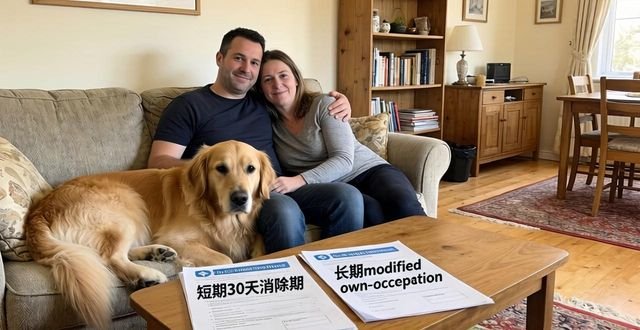
The smart move in 2026? Stack a short-term disability policy – 30-day elimination – on top of a longer-term modified own-occupation policy. The short-term covers the gap. The long-term covers the decades.
The tax nuance that separates amateurs from advisors:
If you pay the premium with post-tax dollars (your checking account, not a Section 125 cafeteria plan), benefits are tax-free.
If your employer pays, or you use pre-tax dollars, the IRS takes its cut.
I have a client – orthopedic surgeon in Denver – who saved $4,200 per year by switching to post-tax premium payments. Then he got sick. The tax-free benefit was $22,000 monthly instead of $15,000 after tax.
That $4,200 annual saving bought him an extra $7,000 per month in disability.
Three mistakes I see every single month:
Mistake #1: “I have enough through work.”
No, you have a rental agreement. Group coverage terminates when you terminate. Disability often precedes termination by about 60 to 90 days. You lose the policy exactly when you need it most.
Mistake #2: “I’ll just buy cheap own-occupation.”
Cheap own-occupation doesn’t exist. What exists is modified own-occupation dressed up with marketing words. Always ask: “Does this policy reduce benefits if I work in another occupation?” If the answer is anything other than “no reduction,” you have a modified definition.
Mistake #3: Forgetting the residual disability rider.
You don’t go from 100% income to 0% overnight. You go to 60%. Then 40%. Then 20%. A policy without a residual (or partial) disability rider pays nothing until you hit the total disability threshold. That threshold is usually 80% to 85% loss of income or time.
Your 2026 action plan, no fluff:
One, pull your group policy summary. Find the definition section. Look for the phrase “any occupation” or “gainful occupation.” Count how many times “modified” appears.
Two, call your broker. Ask them: “On a scale of pure own-occupation to any-occupation, where does my policy land?” If they hesitate, you have your answer.
Three, model a scenario. Take 70% of your current income. That’s your typical benefit. Now subtract 25% for taxes if it’s a group plan. Now subtract your mortgage, private school, car payment, and grocery bill. Does the number turn red? That’s your exposure.
Four, price a pure own-occupation policy from the big five – Guardian, Principal, Standard,Ameritas, MassMutual. The difference between pure and modified is usually 12% to 18% in premium. For a 40-year-old surgeon earning $500K, that’s $800 to $1,200 per year to protect $300K+ of future benefits.
Show me another insurance product with that ROI.
One last story before you close this tab.
David was an anesthesiologist. Forty-seven. Bought a modified own-occupation policy because the broker said “it’s basically the same.” The broker earned a higher commission on that carrier.
Three years later, David develops neuropathy in both feet. Can’t stand for surgeries. But he can do telemedicine consultations – $180,000 per year.
His modified policy said: “You are working. No benefit.”
His mortgage said: “We need $9,200 on the first.”
His daughter’s college tuition statement said: “Due August 15th: $38,000.”
David now teaches other doctors how to read their policies. He doesn’t do it for free.
Read your contract. Ask the hard questions. Pay the extra $100 a month. Your future self – the one with the tremor, the back pain, the bad luck – will thank you.
Because in 2026, modified own-occupation isn’t a definition. It’s a bet.
And you just bet against yourself.
Leave a Reply