
Introduction: I Thought One Policy Was Enough — It Wasn’t
For a long time, I believed disability insurance was a one-policy decision.
I had coverage through work. I saw “disability insurance” on my benefits page. I checked the box. And mentally, I moved on.
What I didn’t realize — and what cost me months of stress and lost income — was that short-term disability insurance and long-term disability insurance are not interchangeable. They solve very different problems, and confusing the two is one of the most common and expensive mistakes Americans make.
I made that mistake.
And I paid for it with savings, anxiety, and regret.
Why Short-Term vs Long-Term Disability Insurance Is So Commonly Misunderstood
The biggest problem is how these products are marketed.
Most people hear:
“If you can’t work, disability insurance pays you.”
That statement is technically true — but dangerously incomplete.
In reality:
-
Short-term disability (STD) covers temporary disruptions
-
Long-term disability (LTD) covers life-altering situations
I didn’t understand that difference until I was living inside it.
My First Assumption: Short-Term Disability Would Carry Me Through
When I was younger and healthier, short-term disability felt “reasonable.”
It covered:
-
A few weeks
-
Sometimes a few months
-
With relatively fast payouts
I told myself:
“If something serious happens, I’ll recover quickly anyway.”
That belief was optimism — not planning.
When my recovery took longer than expected, short-term benefits ended quietly. No warning. No extension. Just a final payment.
That was the moment I realized short-term disability is not designed to protect your lifestyle — only to buy you time.
Short-Term Disability Insurance: What It Actually Does
Short-term disability insurance is best described as a bridge, not a solution.
From my experience and research, STD typically provides:
-
40%–70% of income
-
Coverage lasting 3–6 months
-
Faster approval and payout
-
Employer-based limitations
It’s helpful — but limited.
What STD Helped Me With
-
Immediate bills
-
Short recovery periods
-
Temporary medical leave
What STD Couldn’t Handle
-
Extended rehabilitation
-
Chronic conditions
-
Mental health recovery
-
Long-term loss of earning ability
When STD ended, my expenses didn’t.
Long-Term Disability Insurance: What I Wish I Had Taken Seriously Earlier
Long-term disability insurance is fundamentally different.
It’s not about weeks — it’s about years.
When I finally had to rely on LTD, I realized it was the only thing standing between me and financial collapse.
But even then, I underestimated how conditional and complex it could be.
LTD typically covers:
-
50%–60% of income
-
Long durations (2 years to age 65)
-
Strict definitions of disability
-
Longer waiting periods
It’s more powerful — but also more unforgiving if misunderstood.
The Gap That Almost Broke Me: When STD Ends and LTD Hasn’t Started
Here’s the part no one warned me about.
There is often a gap between short-term and long-term disability benefits.
In my case:
-
Short-term benefits ended at 12 weeks
-
Long-term benefits didn’t begin until day 90
-
Claims processing took even longer
That gap meant:
-
No income
-
No certainty
-
No emotional safety net
I had never felt so financially exposed.
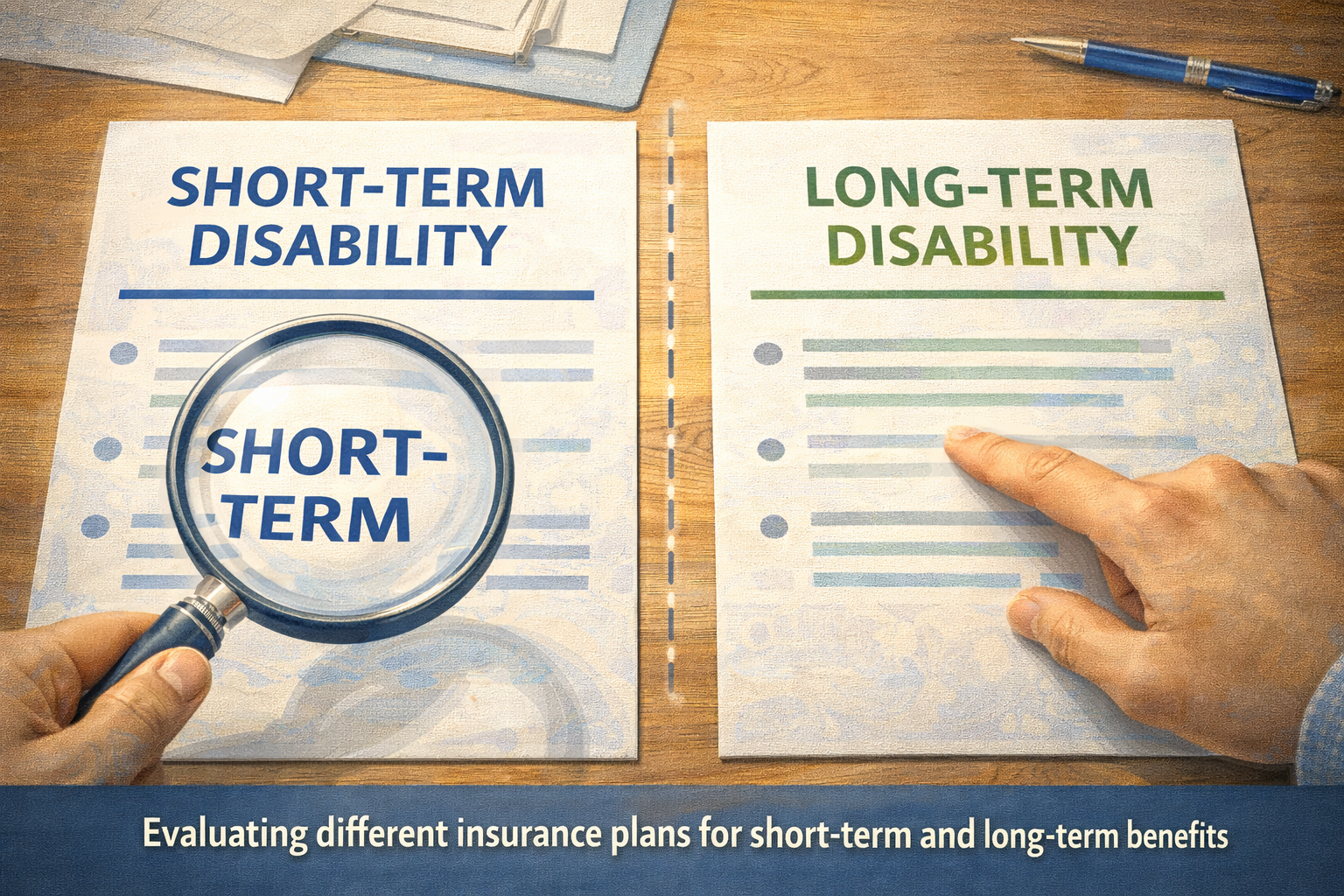
STD vs LTD: Side-by-Side Comparison (What I Should Have Seen Earlier)
| Feature | Short-Term Disability | Long-Term Disability |
|---|---|---|
| Coverage Length | Weeks to months | Years or decades |
| Income Replacement | 40%–70% | 50%–60% |
| Waiting Period | 0–14 days | 30–180 days |
| Claim Complexity | Relatively simple | Highly detailed |
| Best For | Temporary injuries | Serious or chronic conditions |
| Emotional Stress | Lower | Much higher |
Seeing this comparison now, it’s obvious.
Back then, I didn’t even know to ask.
The Emotional Cost of Choosing the Wrong Coverage
What surprised me most wasn’t just the financial impact — it was the emotional one.
When STD ended, I felt:
-
Abandoned
-
Unprepared
-
Ashamed for not planning better
I remember lying awake at night doing math in my head, wondering how long my savings would last.
That mental stress slowed my recovery more than the injury itself.
Many users across the U.S. describe the same feeling:
“I thought I was covered — until I wasn’t.”
Common U.S. User Mistakes I Saw Repeated Everywhere
After my experience, I started reading thousands of user stories.
The same mistakes kept appearing:
-
Assuming short-term disability automatically transitions to long-term
-
Believing employer coverage is “enough”
-
Ignoring elimination periods
-
Not understanding claim approval timelines
-
Not planning for partial disabilities
I wasn’t unlucky — I was uninformed.
How Experts Recommend Combining Short-Term and Long-Term Disability
After everything I went through, I finally understood the smarter approach:
STD and LTD are meant to work together — not replace each other.
The Ideal Setup (According to Most Experts)
| Component | Purpose |
|---|---|
| Emergency Savings | Covers first 30 days |
| Short-Term Disability | Covers immediate recovery |
| Long-Term Disability | Protects long-term income |
This layered approach creates continuity — something I didn’t have when I needed it most.
What Changed When I Fixed My Coverage Strategy
Once I adjusted my mindset and my coverage:
-
I stopped relying solely on employer benefits
-
I coordinated STD and LTD timelines
-
I shortened elimination periods where possible
-
I mentally planned for longer recoveries
The difference was night and day.
Instead of fear, I felt:
-
Prepared
-
In control
-
Resilient
That confidence mattered just as much as the money.
The Hard Truth: Short-Term Disability Is Comfort — Long-Term Is Survival
If I had to summarize my experience in one sentence, it would be this:
Short-term disability keeps you comfortable. Long-term disability keeps you afloat.
Both are valuable — but confusing them is costly.
What I Would Tell Anyone Choosing Between STD and LTD Today
From someone who learned the hard way:
-
Never assume “short-term” will be enough
-
Don’t delay long-term planning because you feel healthy
-
Understand the gap between policies
-
Plan emotionally, not just financially
-
Treat disability insurance as income protection, not a benefit
Final Reflection: This Was a Lesson I Paid For Personally
I didn’t learn the difference between short-term and long-term disability insurance from a brochure.
I learned it through:
-
Lost income
-
Sleepless nights
-
Financial fear
-
And painful self-awareness
If this article helps even one person avoid that experience, then sharing it was worth it.

Leave a Reply