


Introduction: The Unique Risk Facing Self-Employed Workers
Self-employment offers flexibility, independence, and income potential—but it also removes one critical safety net: employer-sponsored benefits. For millions of freelancers, consultants, and business owners in the United States, a temporary or long-term disability can instantly eliminate income.
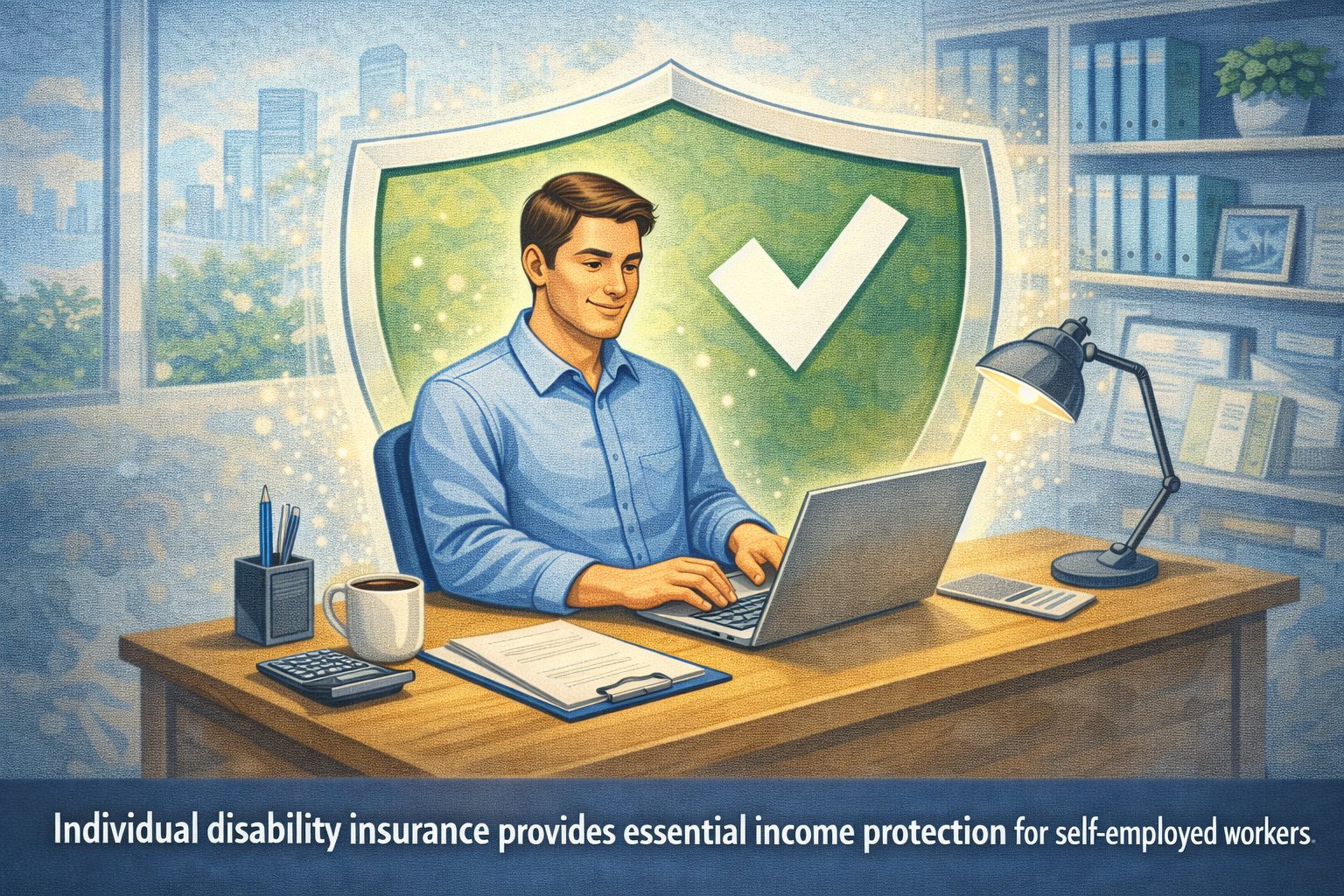
This is why Disability Insurance is especially important for the self-employed. Without an employer to provide group coverage, individual disability insurance for self employed professionals becomes the primary tool for protecting income and sustaining financial stability.
This article explains how individual Disability Insurance works for self-employed individuals, why standard coverage is often insufficient, and how to design a policy that aligns with entrepreneurial income structures.
Why Disability Insurance Is Critical for the Self-Employed
Unlike traditional employees, self-employed individuals face several compounded risks:
-
No employer-paid Disability Insurance
-
Income tied directly to personal productivity
-
Limited access to paid sick leave
-
Ongoing business expenses during disability
Disability Insurance addresses these risks by providing predictable income replacement when health issues prevent work.
What Is Individual Disability Insurance?
Individual Disability Insurance is a privately owned policy purchased directly from an insurer. Unlike group plans, individual policies are:
-
Fully portable
-
Customizable to income and occupation
-
Not dependent on employer participation
-
Often more robust in disability definitions
For self-employed individuals, this form of Disability Insurance is often the only comprehensive income protection option.
Individual Disability Insurance for Self Employed Professionals
Individual disability insurance for self employed individuals is designed to replace personal income when illness or injury limits the ability to work.
Key features include:
-
Income-based benefit calculations
-
Monthly benefit payments during disability
-
Long-term benefit periods
-
Policy ownership independent of business structure
These policies are commonly used by consultants, freelancers, independent contractors, and small business owners.
How Income Is Defined for Self-Employed Individuals
Income verification is one of the most important aspects of individual Disability Insurance underwriting.
Insurers may evaluate:
-
Net income reported on tax returns
-
Schedule C or K-1 income
-
Consistency of earnings over time
-
Business expenses and deductions
Because self-employed income can fluctuate, accurate documentation is essential to securing appropriate coverage levels.
Benefit Amounts and Replacement Ratios
Individual Disability Insurance typically replaces 50% to 60% of earned income, subject to underwriting limits.
While this may seem modest, the goal is to:
-
Maintain essential living expenses
-
Avoid overinsurance
-
Encourage long-term financial sustainability
For high-income self-employed professionals, supplemental policies may be needed to close coverage gaps.
Business Overhead Expense (BOE) Coverage
In addition to personal income protection, many self-employed individuals face ongoing business costs during disability.
Business Overhead Expense (BOE) insurance can cover:
-
Office rent
-
Utilities
-
Employee salaries
-
Equipment leases
-
Insurance premiums
BOE coverage complements Disability Insurance by ensuring the business itself can survive during the owner’s recovery.
Own Occupation Coverage for Specialized Professionals
Many individual Disability Insurance policies offer own occupation definitions, which are particularly valuable for self-employed professionals.
Own occupation coverage means:
-
Benefits are paid if you cannot perform your specific job
-
You may work in another capacity without losing benefits
-
Specialized skills are fully protected
This is especially important for professionals whose income depends on technical expertise or physical capability.
Cost Factors for Individual Disability Insurance
Premiums for individual Disability Insurance depend on several factors:
-
Age and health
-
Occupation risk classification
-
Income level
-
Benefit period length
-
Waiting period duration
-
Optional policy riders
While premiums are an expense, they are often small compared to the financial impact of prolonged income loss.
Tax Treatment of Benefits for the Self-Employed
Taxation of Disability Insurance benefits depends on how premiums are paid:
-
Premiums paid with after-tax dollars typically result in tax-free benefits
-
Premiums deducted as business expenses may produce taxable benefits
Tax strategy should be considered when structuring coverage, especially for high-income self-employed individuals.
Common Mistakes Self-Employed Individuals Make
Some of the most frequent planning errors include:
-
Relying solely on savings
-
Underestimating disability duration
-
Choosing minimal benefit periods
-
Ignoring business expense exposure
-
Delaying coverage until health changes
Disability Insurance is most effective when purchased early and structured thoughtfully.
Real-World Example: Self-Employed Consultant
A self-employed consultant earning $120,000 annually experiences a serious illness. With individual Disability Insurance replacing 60% of income:
-
Monthly benefits support household expenses
-
Savings remain intact
-
Business relationships are preserved
-
Recovery is not rushed due to financial pressure
This illustrates how Disability Insurance protects both income and decision-making flexibility.
Integrating Disability Insurance Into Entrepreneurial Planning
For self-employed individuals, Disability Insurance should be integrated with:
-
Emergency funds
-
Business continuity planning
-
Retirement contributions
-
Health insurance coverage
Together, these elements create a resilient financial foundation.
Key Takeaways
-
Self-employed individuals face heightened income risk
-
Individual Disability Insurance provides primary income protection
-
Income verification and underwriting are critical
-
Own occupation definitions add significant value
-
BOE coverage protects business continuity
-
Early planning improves affordability and coverage quality
Conclusion
Individual disability insurance for self employed professionals is not optional—it is essential. Without employer benefits, self-employed individuals rely entirely on their ability to work, making Disability Insurance the cornerstone of income protection.
By securing properly structured coverage, entrepreneurs and independent professionals can protect their income, preserve their businesses, and maintain long-term financial stability even when health challenges arise.

Leave a Reply