

Introduction: The Cost of Being Underinsured
Most people who purchase Disability Insurance ask the same critical question: how much disability insurance coverage do I need? The answer is rarely simple. Too little coverage can leave you financially exposed during disability, while excessive coverage increases costs without meaningful benefit.
Disability Insurance is most effective when coverage levels are carefully aligned with income, expenses, and long-term financial goals. This article provides a structured, professional framework for determining the right amount of coverage for U.S. workers, professionals, and self-employed individuals.
Why Coverage Amount Matters in Disability Insurance
Disability Insurance exists to protect income, not to replace it entirely. The purpose of determining coverage needs is to:
-
Maintain essential living expenses
-
Preserve long-term financial plans
-
Avoid unnecessary financial strain
-
Balance affordability with protection
An appropriate coverage amount ensures stability without overinsurance.
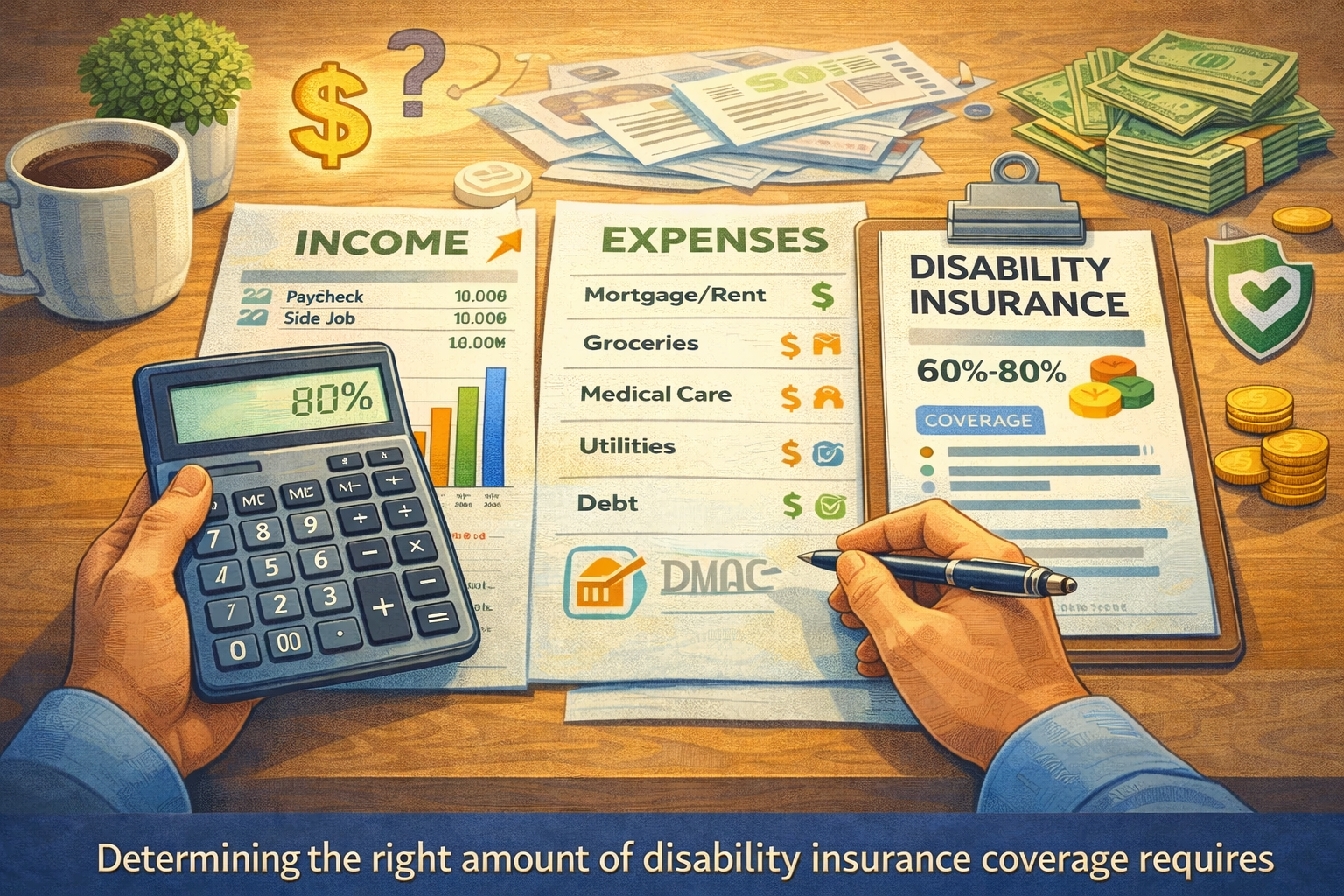
Step 1: Identify Your Gross Earned Income
The first step in determining how much disability insurance coverage do I need is identifying your gross earned income.
This may include:
-
Base salary or wages
-
Bonuses and commissions (if eligible)
-
Self-employed net income
-
Partnership or professional earnings
Disability Insurance benefits are based on earned income, not investment returns or passive income.
Step 2: Understand Income Replacement Ratios
Most Disability Insurance policies replace 50% to 70% of gross income. This range is intentional and reflects:
-
Reduced work-related expenses during disability
-
Tax considerations
-
Incentives to return to work
Understanding this limitation is essential for realistic planning.
Step 3: Analyze Monthly Living Expenses
While income replacement is capped, expenses often remain fixed. A thorough expense review should include:
-
Housing costs (rent or mortgage)
-
Utilities and insurance premiums
-
Food and transportation
-
Healthcare expenses
-
Debt obligations
-
Family and dependent support
This analysis reveals how much income must be replaced to maintain financial stability.
Step 4: Account for Existing Coverage
Many individuals already have some form of Disability Insurance through employers or professional associations.
Review existing coverage for:
-
Benefit percentage
-
Monthly benefit caps
-
Tax treatment of benefits
-
Waiting periods
-
Benefit duration
Employer-sponsored Disability Insurance often replaces less income than expected, creating coverage gaps.
Step 5: Evaluate Emergency Savings and Assets
Emergency savings play a supporting role in income protection. However, they are not a substitute for Disability Insurance.
Key considerations include:
-
How long savings can cover expenses
-
Willingness to deplete retirement assets
-
Impact on long-term financial goals
Disability Insurance preserves savings by providing ongoing income replacement.
Step 6: Consider Family and Financial Responsibilities
Coverage needs increase with financial dependency. Factors include:
-
Spouse or partner income
-
Children or dependents
-
Elder care responsibilities
-
Education funding goals
Primary earners typically require higher Disability Insurance coverage.
Step 7: Factor in Occupation and Career Stage
Your profession and career trajectory significantly influence coverage needs.
-
Specialized professionals face higher income loss risk
-
Early-career workers have longer exposure periods
-
High earners may exceed employer benefit caps
Disability Insurance should reflect both current and future income potential.
Step 8: Determine an Appropriate Benefit Period
Coverage amount is only part of the equation. Benefit duration matters equally.
Common benefit periods include:
-
2 or 5 years
-
To age 65 or 67
-
Lifetime (in limited cases)
Longer benefit periods provide greater protection but increase premium costs.
Step 9: Adjust for Inflation and Cost of Living
Long-term disabilities expose individuals to inflation risk. Some Disability Insurance policies offer cost-of-living adjustments (COLA) to help benefits keep pace with rising expenses.
Including COLA can significantly affect long-term income adequacy.
Step 10: Balance Coverage With Affordability
Determining how much disability insurance coverage do I need requires balancing ideal coverage with sustainable premiums.
Strategies include:
-
Choosing longer waiting periods
-
Layering employer and individual policies
-
Prioritizing long-term coverage
-
Adjusting optional riders
The goal is consistent protection over time, not maximum coverage at any cost.
Example Coverage Calculation
Consider a professional earning $100,000 annually:
-
Target replacement: 60% ($60,000)
-
Employer coverage: $36,000
-
Coverage gap: $24,000
-
Individual Disability Insurance fills the gap
This layered approach provides balanced and cost-effective protection.
Common Coverage Planning Mistakes
Frequent errors include:
-
Relying solely on employer coverage
-
Ignoring benefit caps
-
Underestimating disability duration
-
Overlooking tax implications
-
Delaying coverage decisions
Proactive planning avoids these pitfalls.
Disability Insurance as Part of a Financial Strategy
Disability Insurance should integrate with:
-
Emergency funds
-
Health insurance
-
Life insurance
-
Retirement planning
When coordinated properly, it strengthens overall financial resilience.
Key Takeaways
-
Disability Insurance replaces a portion of earned income
-
Coverage typically ranges from 50% to 70%
-
Expense analysis is critical
-
Employer coverage may be insufficient
-
Family and career factors matter
-
Coverage should balance protection and affordability
Conclusion
Answering how much disability insurance coverage do I need requires thoughtful analysis, not guesswork. Disability Insurance is most effective when tailored to income, expenses, responsibilities, and long-term goals.
By evaluating coverage needs systematically, U.S. workers and professionals can secure reliable income protection and maintain financial stability—even in the face of unexpected disability.

Leave a Reply